Written By
Andrés SentisEdited by
Victoria PasinPublished
June 28, 2026
Updated on
June 28, 2026
Reading Time
8
minutes
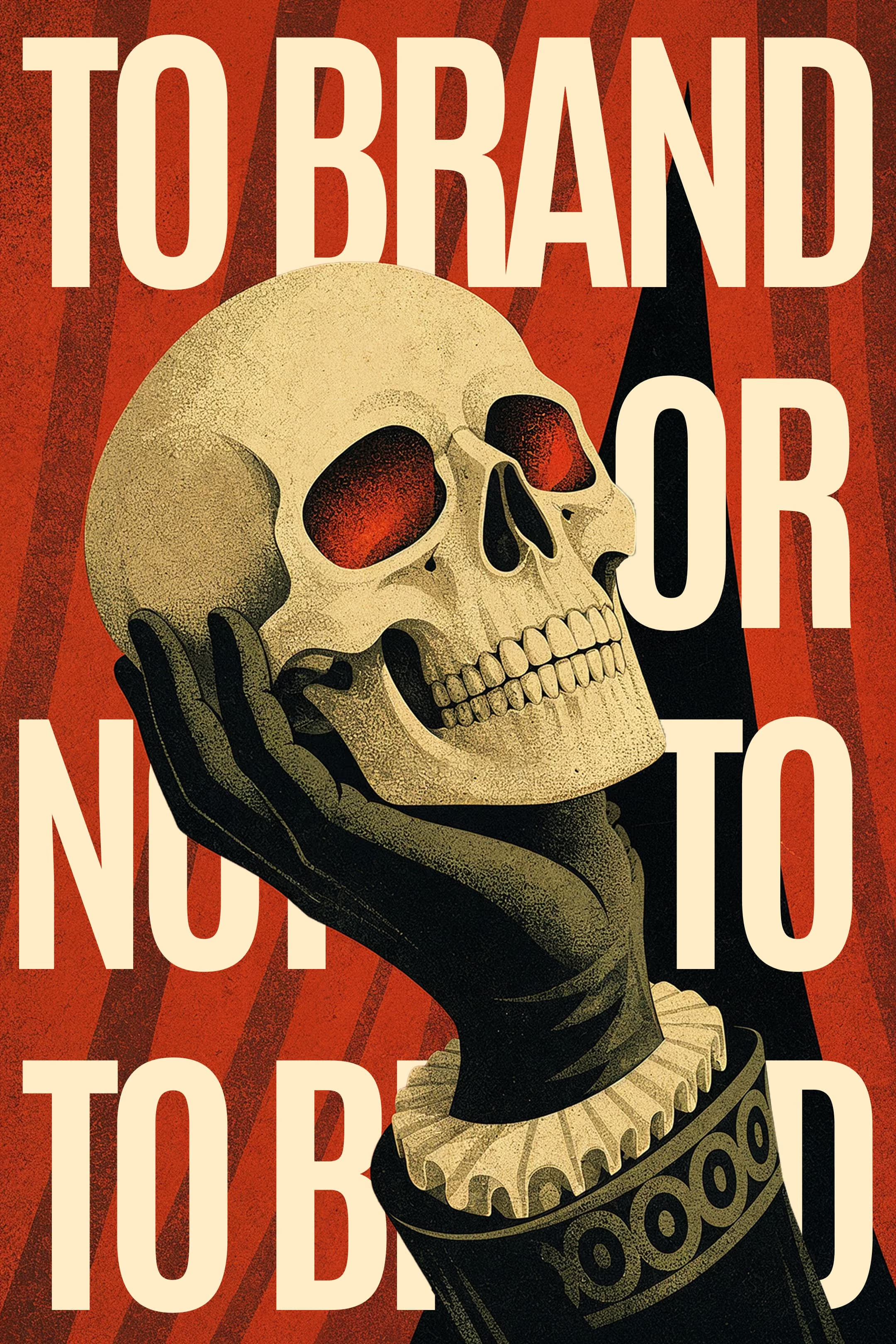
A rebrand is justified when the business changed, not when your mood about the logo did. The real signals are about the business: your brand stopped representing what you sell, you merged, you changed markets or audiences. The fake signals are aesthetic: boredom, a new executive who wants to leave a mark, or wanting to copy a brand you saw somewhere. The good news: when the signal is real, a well-run rebrand doesn’t make you lose what you earned (your history and recognition carry over and you build on top of them). The trick is telling a real signal from an aesthetic excuse and doing it with a plan. Before touching anything, make sure the problem is actually about the brand and not something else.
A rebrand is justified when the business changed, not when you got bored with the logo. That’s the line, and almost nobody checks it before spending.
Most people walk into the conversation with the decision half made: “we want to refresh the brand.” And the trigger is almost always aesthetic, not strategic. Someone saw something nice, a new executive came in, or the brand “feels old.” None of those is reason enough.
Here’s how to tell a real signal from an excuse, and how — when the signal is real — to take on the rebrand without throwing away what you’ve already built.
A rebrand is changing what your brand means, not just how it looks. It’s positioning strategy, not a facelift. And that difference defines everything else.
Changing the palette, modernizing the logo or updating the typeface is a refresh: you keep the equity and just bring it up to date. A real rebrand touches positioning, messaging, sometimes the name, and forces your market to re-learn who you are. One is painting the house; the other is moving.
I’m not the only one saying this. Bill Kenney, CEO of Focus Lab and author of Conquer Your Rebrand, puts it bluntly: a rebrand is never a new logo. His analogy nails it: a new sign on a restaurant doesn’t fix the ripped seats or the frozen food. The logo changes the storefront; the rebrand changes the experience (which is exactly why it costs what it costs).
80% of the time someone asks for a “rebrand,” what they need is a refresh (or not even that). Confusing the two is the first expensive mistake: you kick off a huge project to fix something half the work would’ve solved. So before asking when, it’s worth knowing which triggers are legitimate.
They’re business signals, not taste signals. If your brand stopped representing who you are today, now there’s a case. The rest is noise.
The reasons that actually justify it are concrete: you changed what you sell and the brand is still talking about something else; you merged or acquired and two identities now coexist; you’re entering a new market or segment where your current brand says nothing; or you’re dragging a name that no longer represents the company (the classic “we’re called this because of something we stopped doing in 2015”).
Kenney lays it out similarly in his book: pivoting to a new market, the growth that fragmented you (funding rounds, mergers, services piling on until the messaging becomes a mess), and even trademark issues that force a change whether you like it or not. They all share one thing: the business changed, not the taste.
We’ve seen it up close. Strike Security (cybersecurity) hired us for exactly this and put it in writing in their Clutch review:
“We were changing our core product, so we needed a new identity to reflect that.”
— Diego Levinsky, Head of Marketing, Strike Security
Business changes, brand catches up. Textbook signal.
There’s a real signal almost nobody sees, and Kenney flags it too: when the brand is great on the inside but you fail to show it on the outside. You’ve got a killer team, a solid product and clear values, but from the outside it doesn’t land, and that starts to cost you (you struggle to recruit, you struggle to be taken seriously). There the problem isn’t the product: it’s that the brand isn’t broadcasting what you already are. That’s a legitimate case. The question is whether yours is one of these, or one of the signals we dress up as urgency.
The aesthetic and emotional ones. Boredom, the new executive, and wanting to copy a brand you saw somewhere are the three that waste the most money. None of them is a reason.
Internal boredom is trap number one. You see your logo forty times a day and you’re sick of it; your customer sees it once in a while and is only just starting to register it. You being fed up doesn’t mean the market is (spoiler: the market didn’t even notice).
Then there’s the new CMO or CEO who wants to leave their mark. It’s human, but rebranding to claim internal territory is one of the most expensive and least defensible reasons out there. And the third: you saw a nice brand in another industry and you want that look for yourself. Drawing inspiration is fine; rebranding to look like someone else isn’t strategy, it’s anxiety. If none of these moves the business, stop. But when the signal is a business one, another fear usually shows up: “what if I rebrand and lose everything I’ve built?”
No, not if you do it right. A good rebrand doesn’t reset your equity: it carries it with you. Kenney is clear in his book: rebranding is almost never starting from zero. Your history, your values and what the market already recognizes about you don’t get tossed, they’re kept and built on.
It really happens. We rebuilt Vangwe’s identity and site (a fintech), and per their Clutch review the result was a modernized visual identity that reinforced their position in the fintech space and improved their brand recognition. Their Co-Founder put it simply:
“The final deliverables perfectly aligned with our vision, resulting in a highly effective collaboration.”
— Martín Santini, Co-Founder, Vangwe
They didn’t lose what they had: they amplified it. Which is exactly the point.
The real risk isn’t rebranding, it’s rebranding with no strategy or on your own. That’s when you confuse the market: you switch overnight, with no transition plan, and the people who looked for you under the old brand get lost. With a plan, instead, you walk your audience over by the hand and leave no one behind.
And when the change responds to a real signal, the return is huge: you align the team, you broadcast on the outside what you already are on the inside, and you stop competing on price or features alone. So the question isn’t “rebrand or not,” it’s “rebrand with a plan or on a whim.” And that gets decided with an honest list before you start.
Answer this before you approve a single dollar. If the answers point to the business, go ahead. If they point to taste, stop:
If you pass this list and the signals are still about the business, it’s probably time. If not, you just saved yourself a fortune and a headache.
In the end, a rebrand is a business tool, not an antidote for boredom. But when the signal is real, putting it off costs more than doing it: every month with a brand that no longer represents you is a month communicating something you’ve stopped being.
Before you sign anything, run your case through the list above with someone who’ll tell you the truth, not sell you fluff. If the signal is real, do it right and with a plan that protects what you’ve built; if it’s a refresh or not even that, we’ll tell you too. And if you want us to look at your case, Better Call Ander.Agency.
A few doubts almost always come up when you’re chewing on this. Here are the most common ones, answered, so you can decide with a cooler head.
There’s no number. As Bill Kenney puts it in Conquer Your Rebrand, there’s no silver-bullet timing: it depends on each company. The idea of “rebranding every X years” is a myth that serves whoever’s selling the project, not your business. One brand can be perfect for ten years and another can need a change after three.
What defines the timing isn’t the calendar, it’s the business. As long as your brand still represents who you are and what you sell, don’t touch it just because time has passed. The clock isn’t a signal; real changes in your company are.
A refresh modernizes the aesthetics (logo, colors, typography) while keeping the equity and recognition you already have. It’s bringing yourself up to date without the market having to re-learn who you are. Faster, cheaper and less risky.
A rebrand changes the positioning, the messaging and sometimes the name: it redefines what your brand means. It forces your audience to update the idea they had of you. Most of the time someone asks for a rebrand, a refresh would actually do the job.
No, and it’s the most common trap. You see your brand dozens of times a day and burn out long before your customer, who runs into it now and then. Your fatigue isn’t a market data point.
Before acting on boredom, ask outside: do your customers perceive the brand as old, or is it just you? If the problem lives only on your side of the counter, what you need isn’t a rebrand, it’s some perspective (and sometimes a coffee).
More than the agency fee. The visible cost is design and strategy; the invisible one is updating everything the brand touches: website, social, materials, packaging, internal documents. It’s worth budgeting for the full change, not just the logo.
But think of it as an investment, not an expense: when it responds to a real signal and is done with a plan, a rebrand pays for itself in internal alignment, better sales and positioning. The expensive thing isn’t rebranding well, it’s doing it on a whim or halfway.
It can, if it’s done badly or comes too early. When you change the brand, the people who recognized you by the old one need to relocate you. If the change is abrupt, with no transition or communication, some get confused and others simply can’t find you.
Done well, on the other hand, a rebrand that responds to a real business change adds more than it costs. The key is having an underlying reason and a transition plan, not an overnight aesthetic swerve.